
Birmingham summers are long, hot, and humid. Your HVAC system does more work between May and October than most systems do all year. Here is how to make sure it is ready.
Why Does Alabama’s Summer Put So Much Strain on HVAC Systems?
Birmingham sits in IECC climate zone 3A. You know what that means: warm and humid. Summer temperatures that reach 94°F and often higher. Humidity hovers near 75% for weeks at a time.
Your air conditioning system handles two jobs in this climate. It cools the air. It also removes moisture. That dehumidification process puts extra load on the compressor, the evaporator coil, and the blower motor. Equipment that works fine in dry heat gets pushed much harder in Alabama’s wet heat.
Then there are the rapid spring weather swings Birmingham is known for. Freezing mornings followed by 75-degree afternoons in the same week. Your system faces mechanical stress before cooling season even begins. Parts expand and contract. Refrigerant pressures fluctuate.
That is why spring preparation matters. A system that enters summer already running at less than full capacity will struggle. A system that enters summer well-tuned, clean, and inspected handles the load.
What Can You Do Before Calling a Professional?
Several important maintenance steps require no special tools or training. These are things every Birmingham homeowner should handle before the first truly hot week arrives.
Change Your Air Filter
This is the single most impactful thing you can do. A clogged filter restricts airflow and forces your system to work harder. In Alabama’s pollen-heavy spring, filters load up fast. Check yours monthly from March through May. Replace it when it looks gray or clogged.
If you have pets, you may need to change filters more often. A home with two dogs and Alabama’s red clay dust can load a standard filter in three to four weeks.
Clear the Area Around Your Outdoor Unit
Your condenser unit sits outside and needs clear airflow. Over the winter, leaves, branches, mulch, and lawn debris accumulate around it. Trim vegetation back at least two feet on all sides. Remove anything resting on top of or leaning against the unit.
While you are out there, look at the aluminum fins on the outside of the unit. If they are matted with dirt, pollen, or cottonwood fluff, the condenser cannot release heat efficiently. You can gently rinse the fins with a garden hose. Spray from inside out to push debris away from the coil. Do not use a pressure washer. That will flatten the fins and make the problem worse.
Check Your Thermostat
Switch your thermostat from heat to cool and set it a few degrees below room temperature. Wait a few minutes. You should hear the system kick on and feel cool air at the vents within five to ten minutes. If nothing happens, if the fan runs but the air is not cool, or if the system cycles on and off rapidly, that is worth a call to a professional before summer arrives.
Open and Check Your Vents
Walk through your home and make sure all supply vents and return grilles are open and unblocked. Furniture, rugs, and curtains can obstruct airflow without you noticing. Closed or blocked vents force your system to push air through fewer openings, which increases pressure and reduces efficiency.
Inspect Your Ductwork (If Accessible)
If you can see ductwork in your attic or crawl space, take a look. Disconnected sections, visible holes, or duct insulation that has fallen away are common in older Birmingham-area homes. Damaged ducts leak conditioned air into spaces you are not trying to cool. That wastes energy and forces the system to run longer.
Learn more about duct repair and sealing →
What Does a Professional Spring Tune-Up Include?
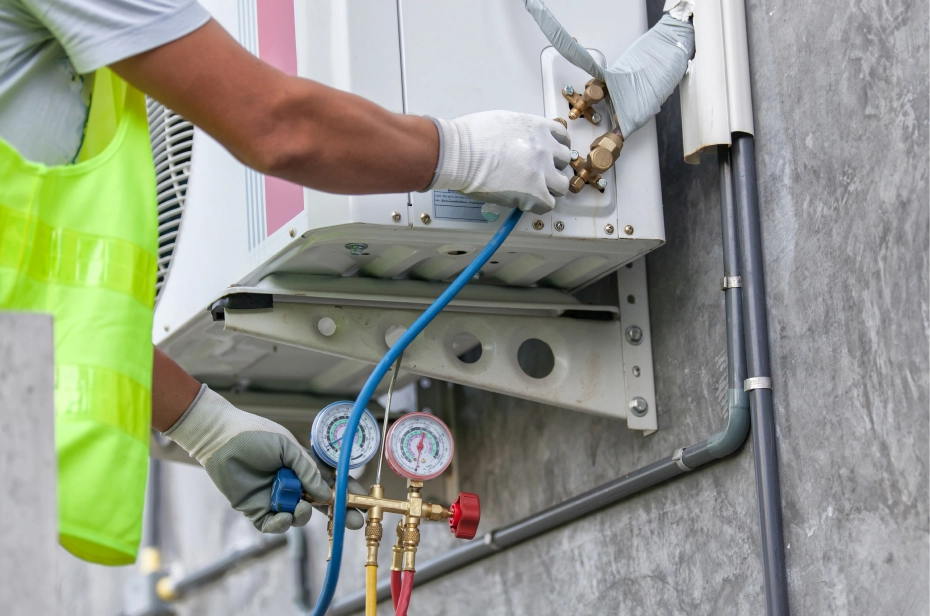
Homeowner maintenance covers the basics. A professional tune-up goes deeper. A trained technician checks the components you cannot see and tests the system under operating conditions.
Here is what a thorough spring maintenance visit should cover:
- Refrigerant levels. Low refrigerant means your system cannot cool properly. The technician checks levels and inspects for leaks.
- Evaporator and condenser coils. Dirty coils reduce heat transfer. The technician cleans both coils and checks for damage.
- Electrical connections. Loose or corroded connections cause intermittent failures. The technician inspects and tightens them.
- Blower motor and airflow. The technician checks motor operation and measures airflow to confirm the system moves enough air.
- Thermostat calibration. A thermostat that reads three degrees off costs you money. The technician verifies accuracy.
- Condensate drain. The drain line removes moisture from the evaporator coil. A clogged drain causes water damage and humidity problems. Common in Alabama’s climate.
- Full heating and cooling cycle test. The technician runs the system through a complete cycle to confirm everything works together.
A good technician documents what they find and walks you through any issues. If something needs attention, you get an explanation and a cost estimate before any work begins. No surprises.
Ready to get your system summer-ready? Schedule a spring tune-up before the heat arrives. Call 205-529-4771 or book online.
Should You Have Your Ducts Cleaned Before Summer?
Spring is a smart time to think about your ductwork. Here is why.
Your ducts spent the winter circulating heated air. Any dust, pollen, pet dander, and debris that accumulated over the past several years is still in there. When you switch to cooling mode, the system pushes that same buildup through your home at a higher volume. Air conditioning runs more air through the ducts than heating does.
In Alabama, spring pollen also plays a role. Pine pollen infiltrates homes through every gap and opening. It settles inside ductwork alongside existing debris. By the time your system is running full-time in June, the ducts are carrying a fresh layer on top of whatever was already there.
Professional duct cleaning before summer gives your system a clean starting point. Source-removal cleaning extracts the buildup. The air your system circulates through your home is genuinely cleaner. Your equipment works more efficiently because airflow is less restricted.
Duct cleaning is not needed every year. Every three to five years is typical. But if you notice dust around vents, musty odors, or worsening allergy symptoms, spring is the right time to address it.
Learn about NADCA-certified duct cleaning →
How Does Humidity Affect Your HVAC System in Alabama?
Humidity is the invisible workload. In a dry climate, your air conditioner mostly cools air. In Alabama, it spends a significant portion of its energy removing moisture.
When indoor humidity stays above 60%, you feel warmer even at lower thermostat settings. Most people respond by turning the thermostat down further. The system runs longer. Energy bills climb. And if the system cannot keep up with the moisture load, you start to see condensation on windows, musty smells, and conditions that promote mold.
A properly maintained system manages humidity effectively. Clean evaporator coils, correct refrigerant levels, and a working condensate drain all contribute to dehumidification. When any of those components are compromised, the system cools the air but leaves too much moisture behind.
If your home feels clammy even when the AC is running, that is not normal. It usually signals a maintenance issue, not a thermostat issue.
When Should You Call a Professional Instead of Waiting?
Some signs should not wait until your system fully breaks down. If you notice any of these, schedule a service call before summer:
- The system runs but the air is not cool
- Ice is forming on the refrigerant lines or evaporator coil
- The system cycles on and off every few minutes
- You hear grinding, squealing, or banging noises
- Water is pooling around the indoor unit
- Your energy bill spiked without a usage change
- Rooms that used to stay comfortable no longer do
Catching a problem in April costs less than an emergency repair in July. HVAC companies are busiest during the first heat wave of the season. Scheduling early gives you more flexibility and avoids the wait.
How Old Is Too Old? When to Think About Replacement
Most HVAC systems last 12 to 18 years. In Alabama’s climate, where equipment runs harder and longer than in cooler states, the lower end of that range is more realistic.
If your system is 12 years old or more, major repairs deserve a harder look. Ask whether the repair cost makes sense for the remaining life of the equipment. A $1,500 repair on a 15-year-old unit may not be the best investment.
Spring is the ideal time for this conversation. You have time to evaluate options, get quotes, and schedule installation before the heat arrives. Replacing a system during an emergency in July means rushed decisions and limited scheduling.
A good HVAC company will give you a straight answer. If repair makes sense, they will repair it. If replacement makes sense, they will explain why and let you decide.
Learn about HVAC installation →
Your Spring HVAC Checklist for Birmingham Homes
Here is a quick reference you can use each spring:
- Change or check air filter (monthly March through October)
- Clear debris from around outdoor condenser unit
- Rinse condenser fins with a garden hose
- Switch thermostat to cool and verify the system responds
- Open and unblock all supply vents and return grilles
- Inspect visible ductwork for damage or disconnections
- Schedule a professional spring tune-up
- Consider duct cleaning if it has been three or more years
- Address any unusual noises, odors, or performance issues now
Doing these things before the first week of sustained 90-degree heat saves you money, prevents breakdowns, and keeps your home comfortable all summer.
Frequently Asked Questions
When Is the Best Time to Schedule a Spring Tune-Up in Birmingham?
March or April. Schedule before the first sustained heat so your system is ready when you need it most. HVAC companies fill up fast once temperatures climb.
How Much Does a Spring HVAC Tune-Up Cost?
Costs vary by company and scope, but a standard residential tune-up is a modest investment compared to an emergency repair. Ask for a clear quote before work begins.
Can I Just Change My Filter and Skip the Professional Service?
Changing your filter is essential, but it does not replace a professional inspection. Refrigerant levels, electrical connections, coil condition, and condensate drain function all require trained assessment. Filters keep your system cleaner. Maintenance keeps it running.
How Do I Know If My System Is Big Enough for My Home?
If certain rooms never get comfortable, the system runs constantly, or indoor humidity stays high, the system may be undersized. A technician can calculate correct capacity based on square footage, insulation, window exposure, and duct layout.
Should I Set My Thermostat to a Specific Temperature in Summer?
The Department of Energy recommends 78°F when you are home. Every degree below that increases energy use by roughly 3%. A programmable or smart thermostat can raise the temperature when you are away and cool the house before you return.
Get Your System Ready Before the Heat Arrives
Birmingham’s cooling season is long and demanding. The best time to prepare is before you need your system at full capacity. Whether it is a tune-up, a duct cleaning, or a repair you have been putting off, spring is the time to handle it.
Integrity Airworks is a NADCA-certified, veteran-owned HVAC and duct cleaning company based in Hoover, Alabama. We serve homes across the Birmingham metro, including Hoover, Vestavia Hills, Homewood, Pelham, and surrounding communities in Jefferson and Shelby counties.